JOHN WALCOTT
MELANGE RELOADED
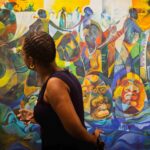
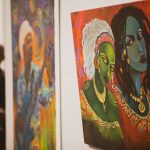
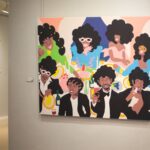
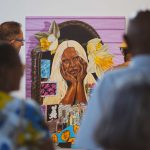
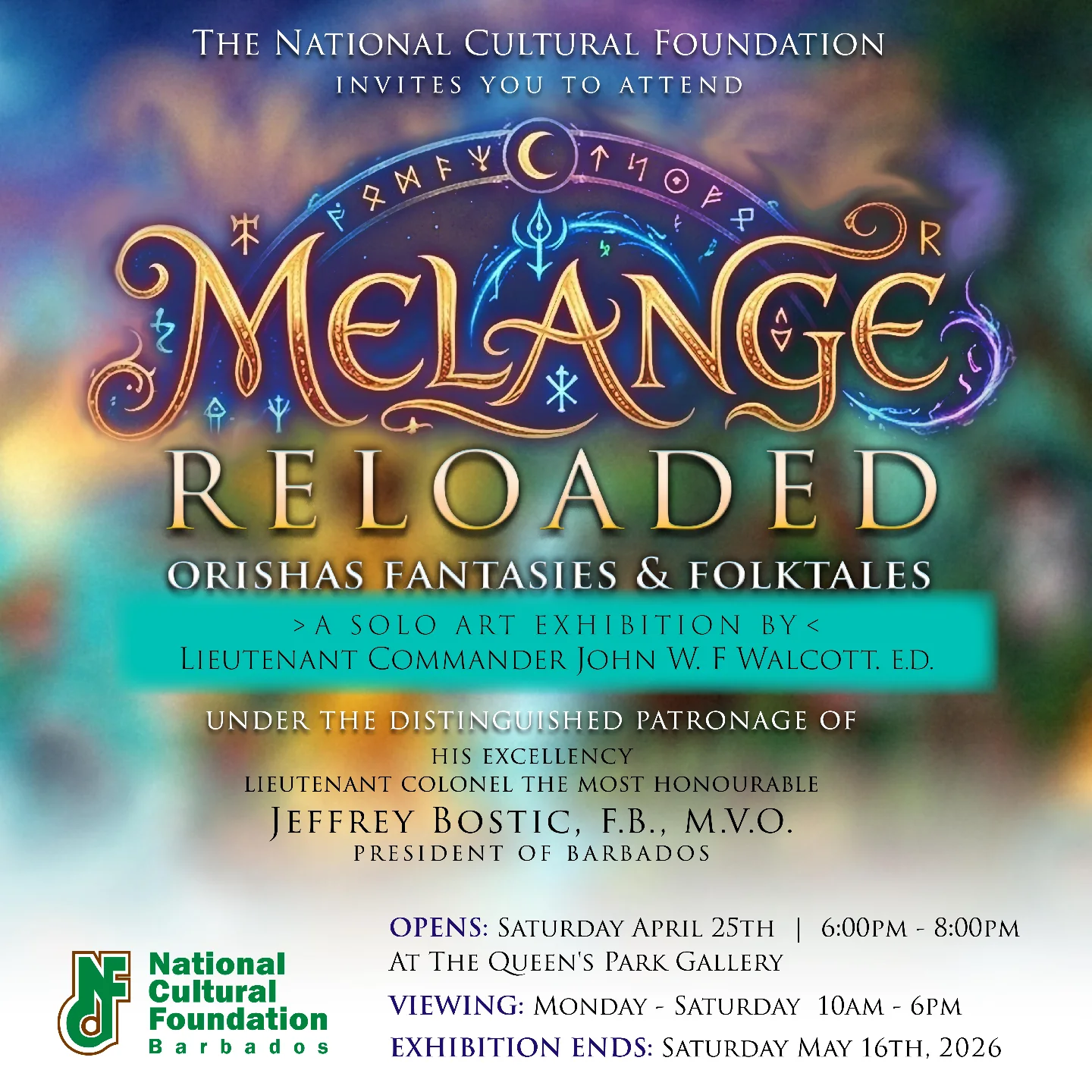
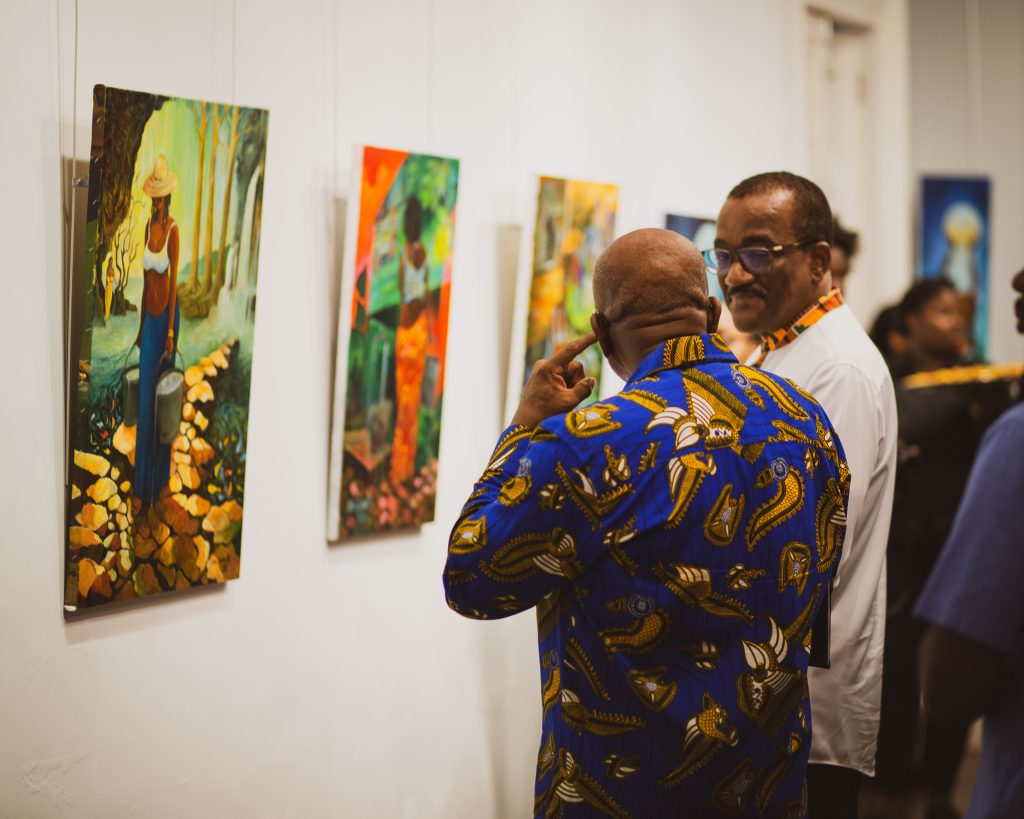
‘Melange Reloaded: Orishas, Fantasies and Folktales’ was a solo exhibition by Barbadian artist, Lieutenant Commander John Walcott. Hosted at The Queen’s Park Gallery, ‘Melange Reloaded’ explored the often-suppressed connections between the Caribbean and West Africa through elements of culture and folklore.
While tales of the Orishas seem commonplace, in years past, it was rare to find anything related to the Orishas (and their affiliated stories) shared or understood locally. While it is easy to dismiss this observation as a cultural issue, the fact that many practices and religions were forbidden during the time of the slave trade also contributed to the wide disconnect that many feel to date.
'Melange Reloaded' overlays Caribbean imagery with that of the Orishas, seamlessly blending Caribbean life with stories from the past to create an atmosphere that speaks to the artist’s personal journey with the West African religion. The stories and symbolism within the work require the audience to engage with them on a deeper level, with the artist utilising elements of the Orishas and the indigenous Caribbean to craft multi-layered pieces that reveal more the longer you engage with them.
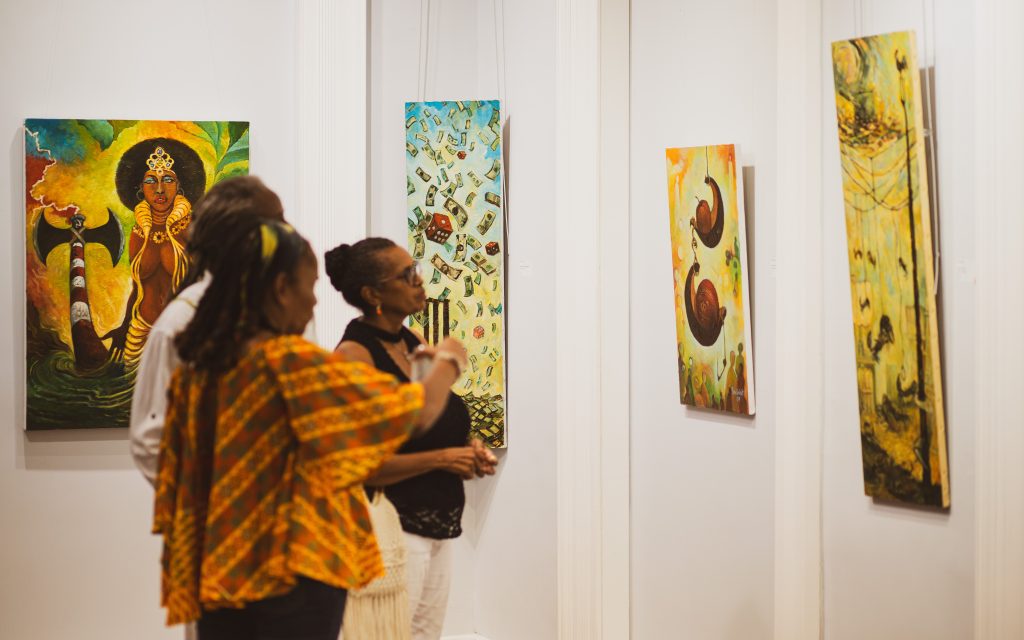
OPENING RECEPTION
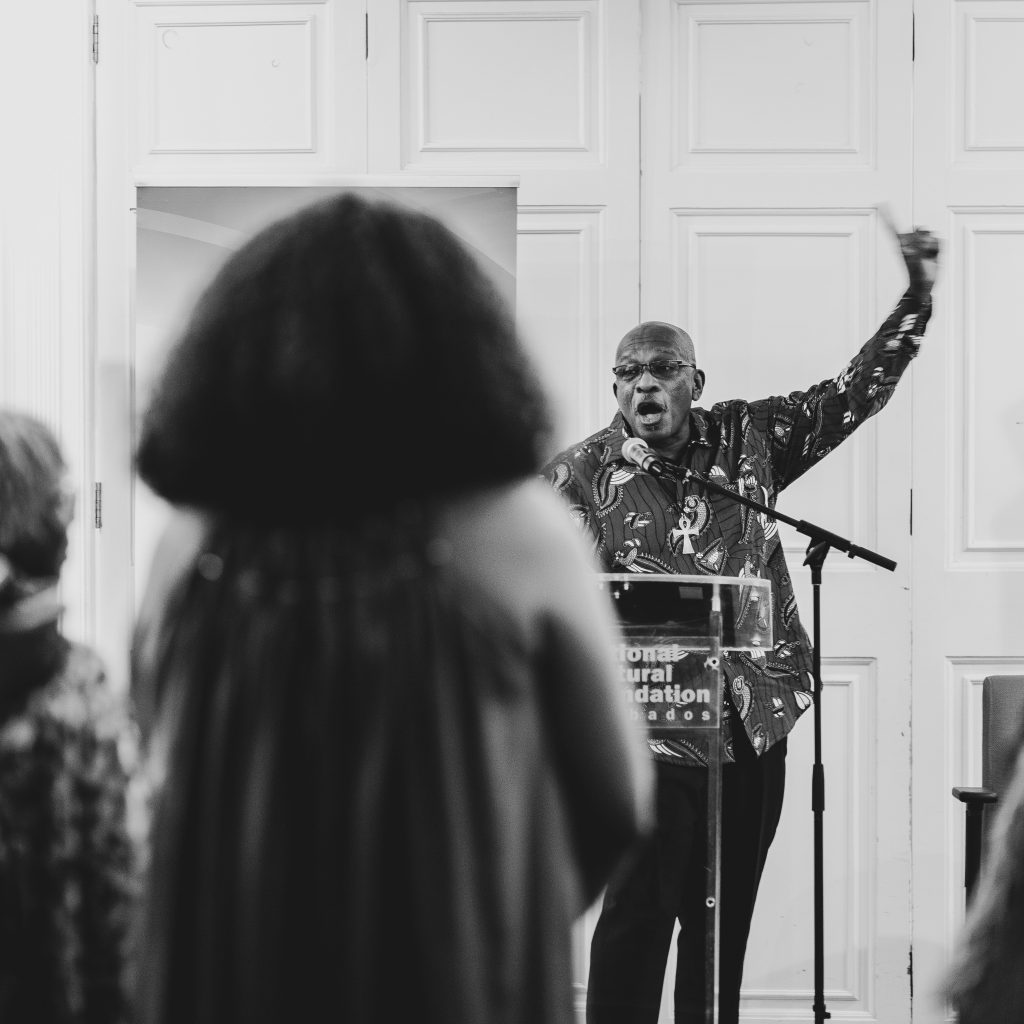
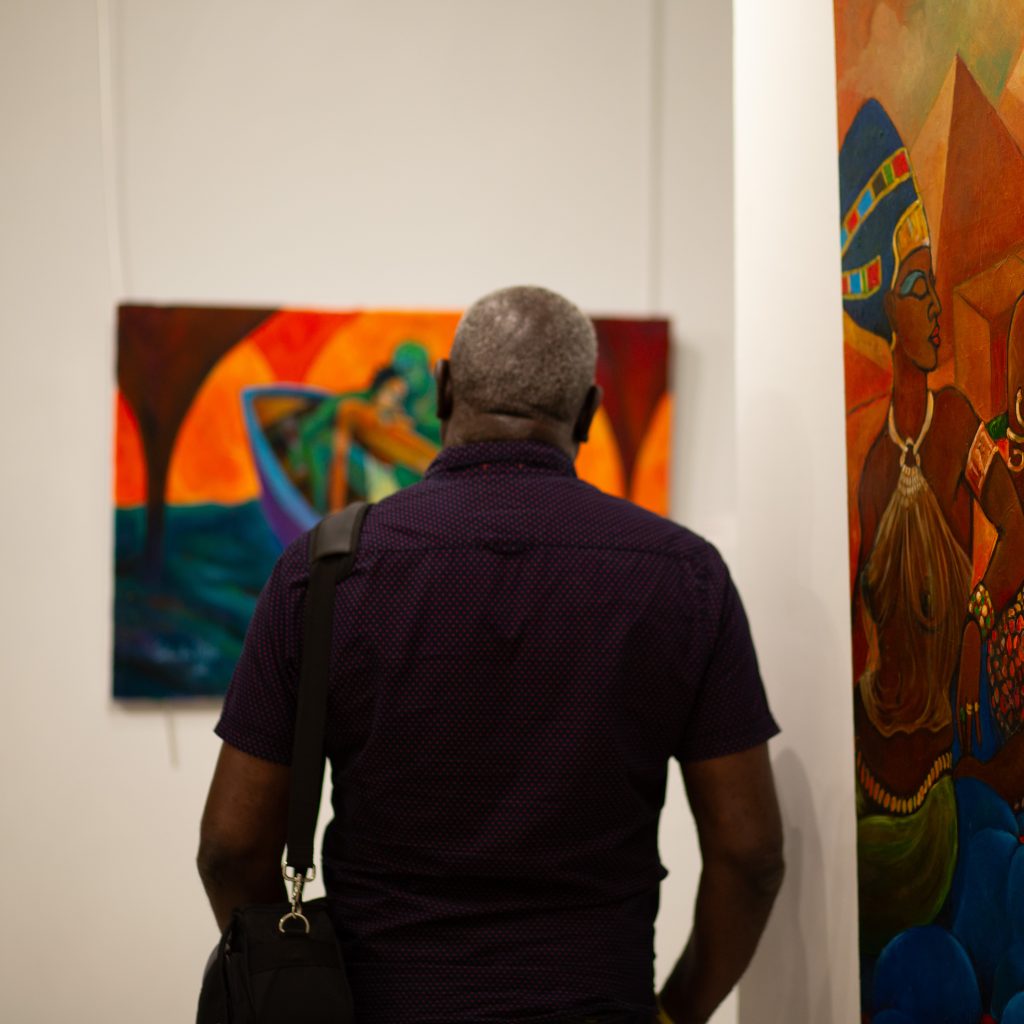
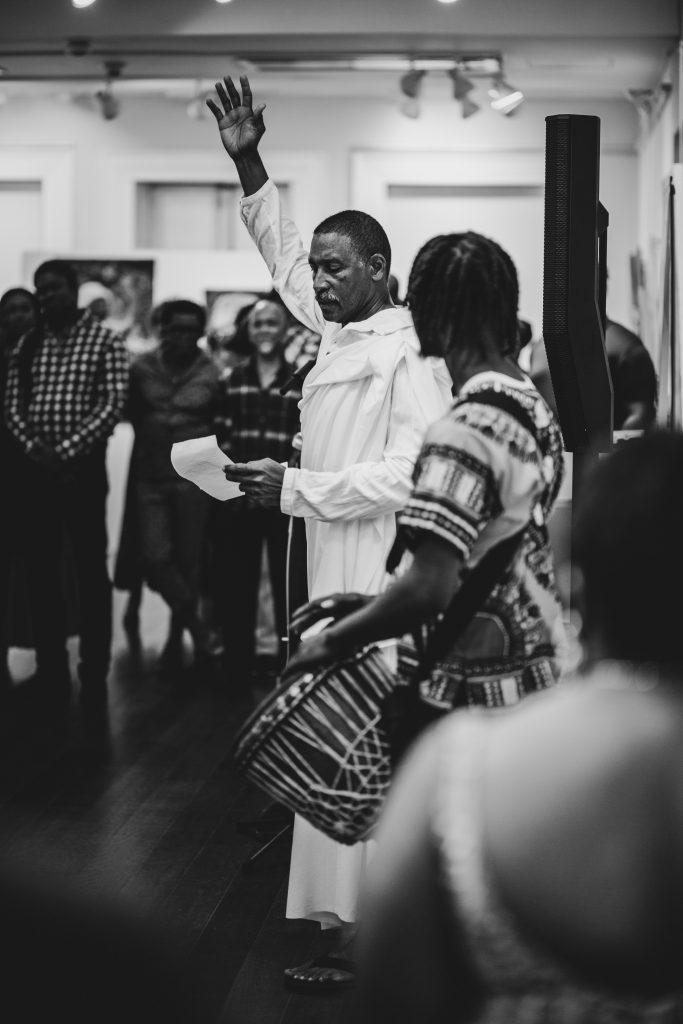
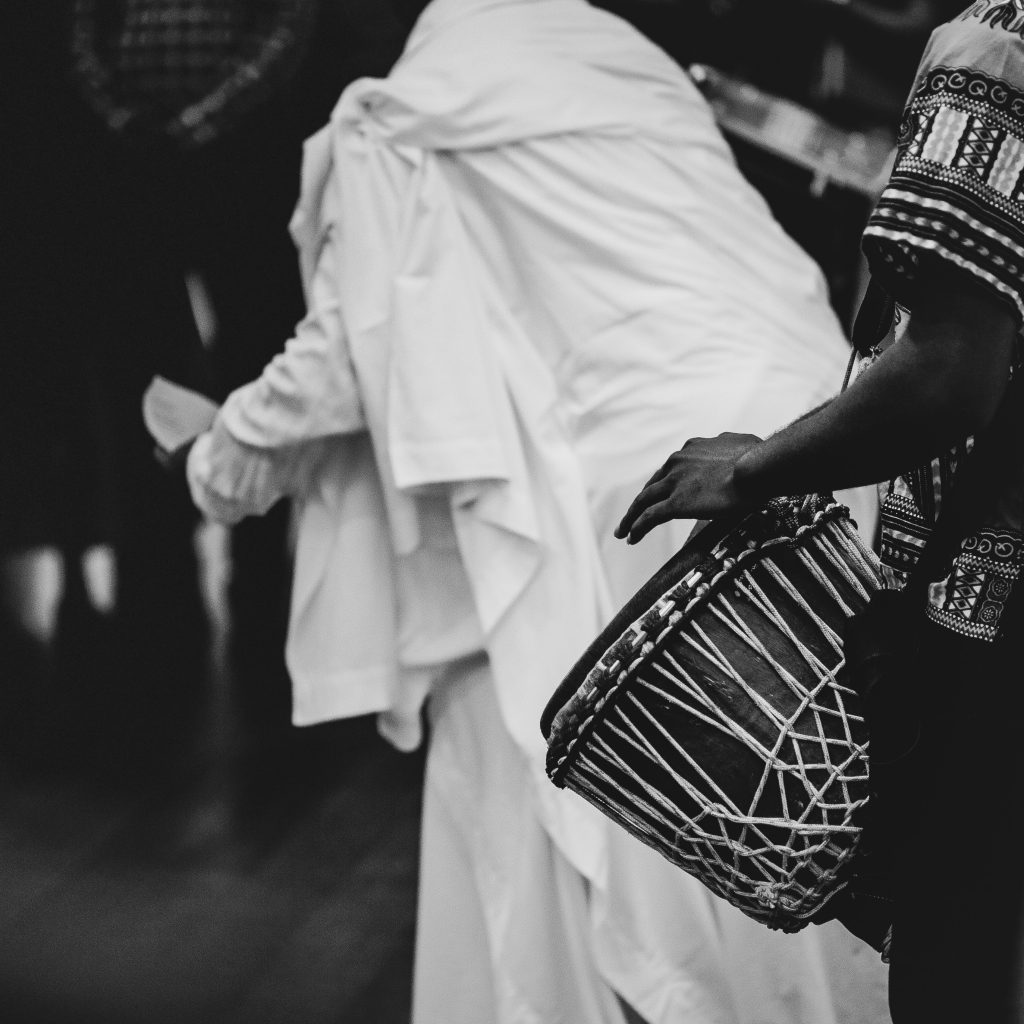
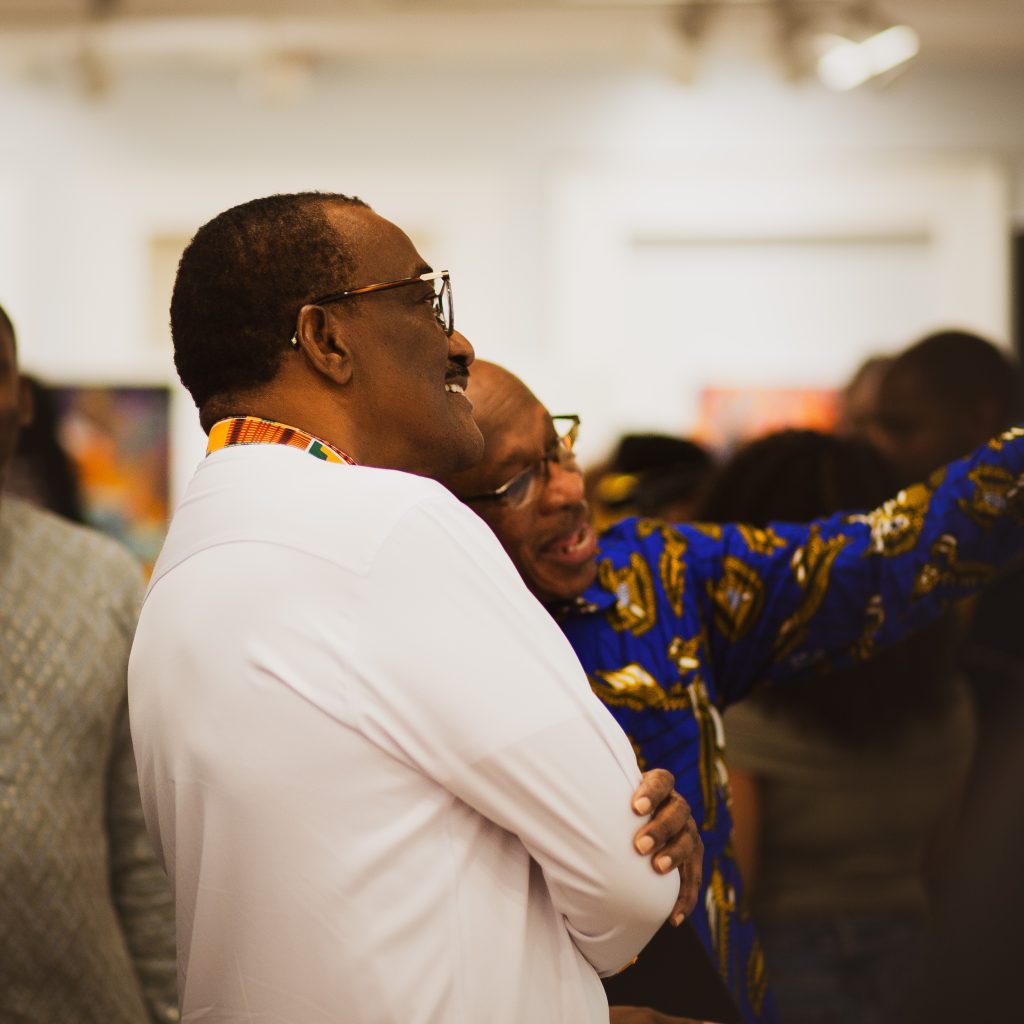
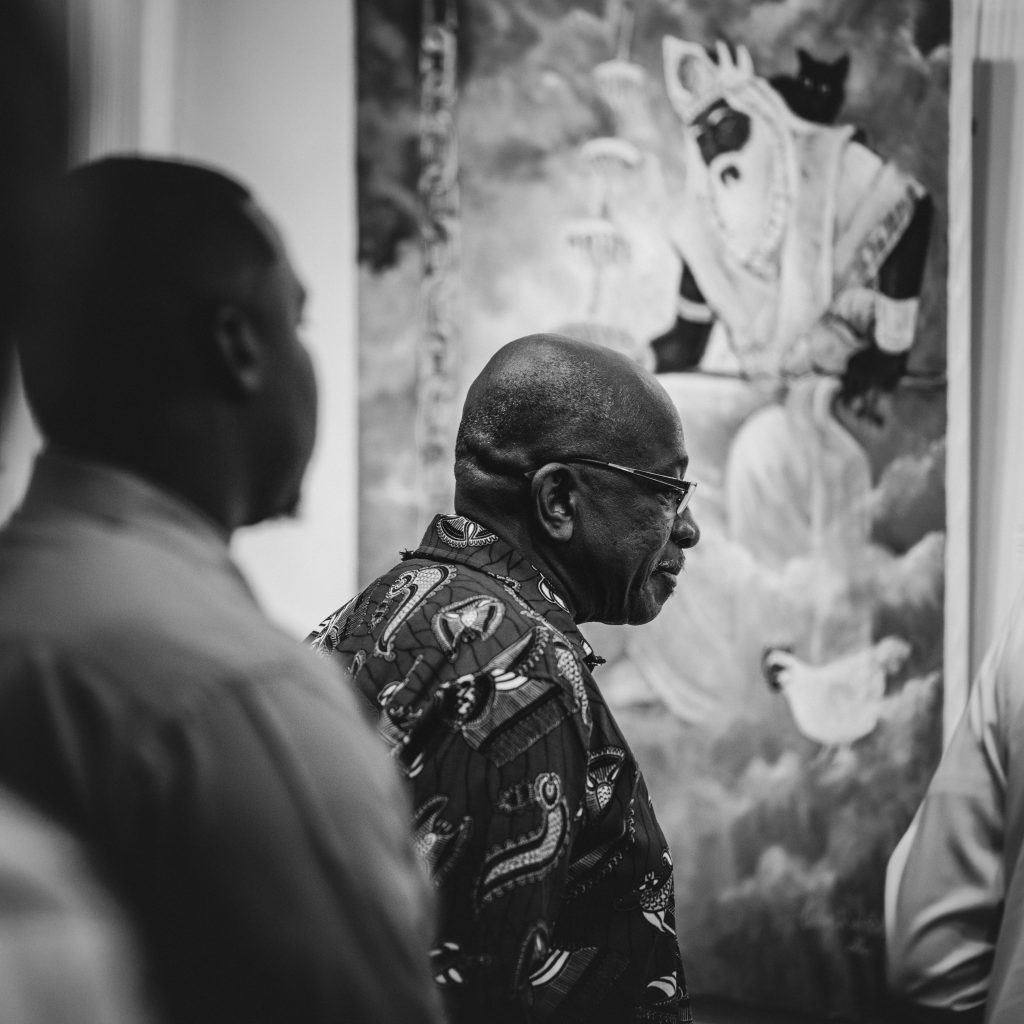
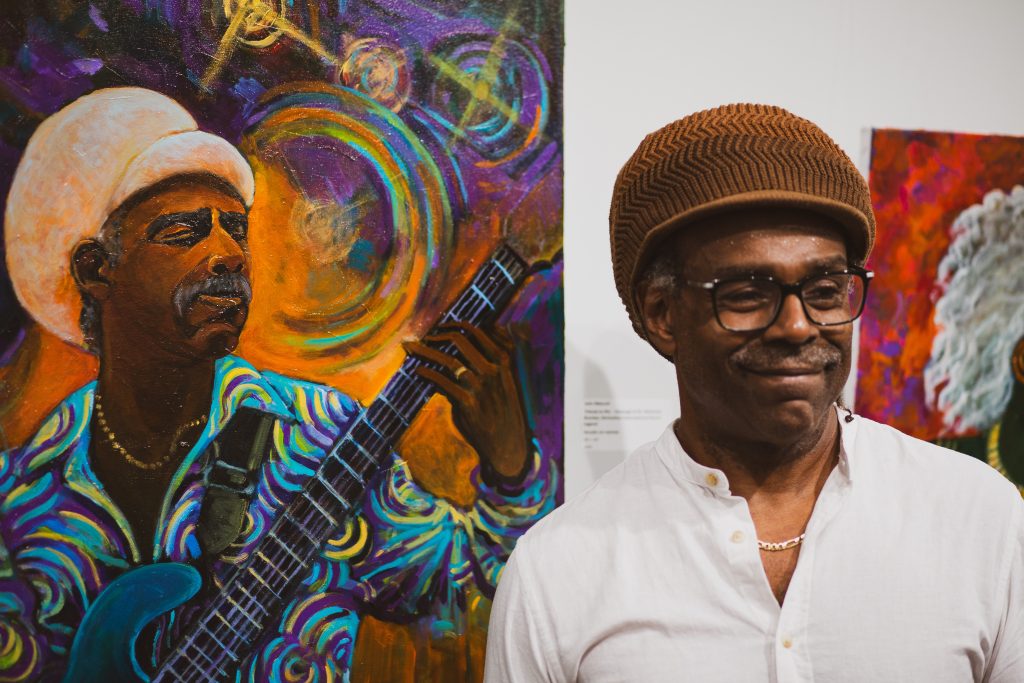
The exhibition opened on Saturday, May 9th 2026, under the patronage of His Excellency, Lieutenant Colonel, The Most Honourable Jeffrey Bostic, President of Barbados. The well-attended reception featured dance and poetry performances accompanied by live music, interspersed with speeches by the artist John Walcott, the CEO of the National Cultural Foundation, Carol Roberts, and the President of Barbados, Lieutenant Colonel Jeffrey Bostic.
The exhibition catalogue is visible at: https://online.fliphtml5.com/vrjdr/reloaded-melange-2026/?1777118816113#p=1
.
John [Walcott's] internal investigation of self is articulated in his reuse of traditional village scenes and popular sport like cricket, which provides a Caribbean surrealist portal for reflection on symbols of our cultural heritage. This is extended to his exploration of spiritual figures of Orisha to introduce us to part of our religous past that has been lost but not forgotten and in some cases hidden in plain sight.
-Kevin Farmer, Deputy Director of the Barbados Museum and Historical Society
Taken from the Melange Reloaded Exhibition Catalogue (p.MR7)
HISTORY
ORISHAS, FANTASIES AND FOLKTALES
The Orishas are deities and divine spirits emerging from the religion of the Yoruba people in West Africa. In many Caribbean islands, where these practices were forbidden to slaves, the Orishas were secretly blended with popular Catholic saints as a way of preserving their connection. In Cuba, this practice is known as Santería.
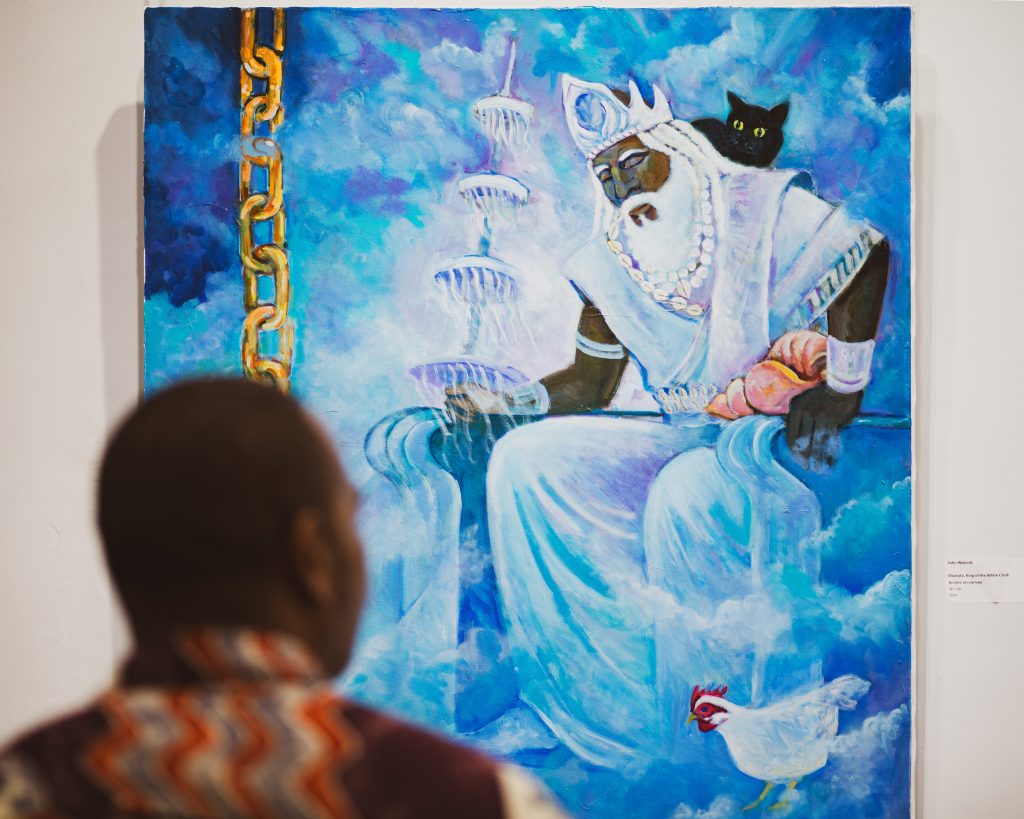
THE ARTIST TALK
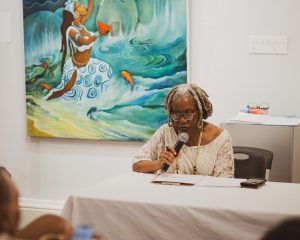
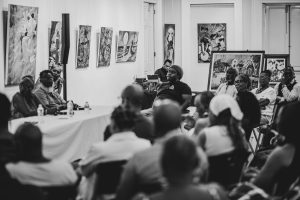
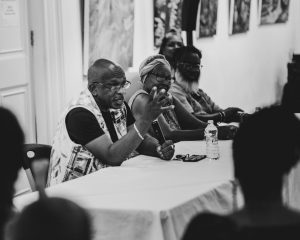
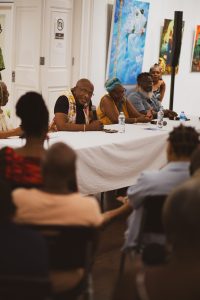
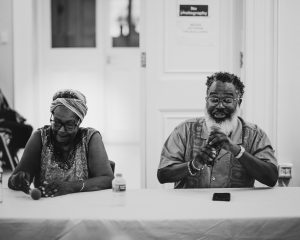
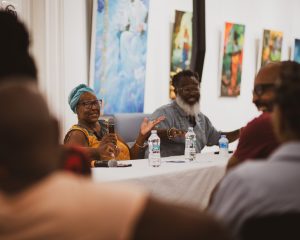
John Walcott (Artist), Dr Nancy Jacobs (Educator of Art History and African-Based Studies) and Kevin Farmer (Deputy Director of the Barbados Museum and Historical Society), during the Artist Talk held on Saturday, May 9th, 2026, spoke of the disconnect that exists between Caribbean nations and the West African religion. While the conversation focuses on the artist’s process, inspirations and development over time, Walcott intersperses anecdotes from his own life that highlight the long path that brought him to the Orishas in the first place.
The conversation touches on elements of spirituality, duality, the intentional suppression of African religions within the Caribbean, and the effects that suppression has had on our society and our connections to one another.
Audio and Transcripts are available below.
Contemporary Caribbean Conversations is committed to the preservation and documentation of the arts in the Caribbean. This recording is for educational purposes only. The following is a recording of a live event where the quality of the audio varies by speaker.
If at any point the audio is unclear, please make use of the transcript below.
Speakers are as follows:
JW: John Walcott (Artist and Educator)
NJ: Dr. Nancy Jacobs (Educator in Art History and Africa-Based Studies)
KF: Kevin Farmer (Deputy Director of the Barbados Museum and Historical Society)
OS: Oneka Small (Curator for the Queen’s Park Gallery, Barbados)
John Walcott (JW): Good evening, all. Good evening. Welcome to Melange Reloaded, The Talk!
JW: Now, they tell me I talk nuff, so I have two other persons here with me to rebuke that.
JW: This journey started a long time ago. I was told it started from birth, but, in terms of African spirituality… I always loved making marks when I was a little kid. Drawing up the place.
JW: You know when you’re in primary school and you have your textbooks when it comes to the last day? You either play cards or you go and — that time you had a picture of Her Majesty the Queen — yuh know, you give her glasses, give her vampire teeth — look, sorry — but moustache, yuh know, you're just, drawing them up, right?
JW: But I just had this impulse to make marks, to draw. Anytime I get a chance, I draw.
JW: When I was at school, in my third year at secondary school, I got my leg broken. No, a fella broke my foot. I’ll tell you straight up, a fella named TC broke my foot.
JW: I got my leg broken at the prime of my life, in school, and it was very sad. Looked through the window, fellas playing cricket.
JW: And my art teacher at the time, called Leonard Jones, said: John, your leg is broken, but nothing is wrong with your hands. Draw.
JW: So I used to spend a lot of time in the art room, drawing, drawing, drawing, and drawing. That’s where it started.
JW: But fast forward again to my introduction to African spirituality. We lived in Deacon's Road. This is when I was about seven, eight years old, and we used to go to St. Mary's Church. I was a server at the altar, right? My old man, daddy, he wasn't a priest yet. We would go, on a Sunday night [because] you go to church three times a day, right?
JW: Morning, Sunday School at three o'clock, and then you'd go to evening song at seven; and we had to go to all. So one night, we were going to church. When we got near to Fontabelle, yuh know, we hear bum-ba-da-da, bum-ba-da-da, bum-ba-da-da-da. I said, what's that?
JW: So we got a little closer. I said, Daddy, what is that? He said, Man, that’s Elton Mottley doing that ‘back to Africa’ thing.
JW: I said, I like the drums, man. He said, That ain’t for you; we going to church, right?
JW: But the drums were calling, they were calling at that time, and I understood after. It was Yoruba Yard. And then over the years, you know, going to Community College, you get to meet Elombe and stuff. And then we did a course in African Art History with Dr. Jacobs. She helped open this door for me — I'm indebted to her, Dr. Jacobs. And then, [my] good buddy here, Edmond, he was at community college with me, and we started to explore different things.
JW: I always used to paint things with water, things, female forms. You can see, yuh know, they look very sensuous and stuff, but they're very classy, they're very strong, but there was this thing with water all the time. I went to an exhibition back in 2012 with an artist called Leandro Soto from Cuba.
JW: Anybody remember him? Yes, a brilliant guy. He used to do set design and so on.
JW: He would come to a show with an attaché case, right? But where the set? In here, in here. And when he opened the attaché case, it was painted on what we call brown paper.
JW: And when he opened, he said he could fill this room in here. And he was also exploring the Orishas. (At that time, I’m getting to learn the names). And he had it more in an abstract form.
JW: I said I need to go and talk to him. He said, so tell me about this. He told me about Oshun, heard that for the first time, or at least I was told before, but it hit in my head again.
JW: And I told him, I'm painting all these figures with these ladies on water. He asked, What colours are you using? I said, Lots of yellow and blue. And he smiled. He smiled. He said, Oshun and Yemaya, they're speaking to you, listening.
JW: And I went back to my studio. I looked and I said, Oh my gosh. So I started to convert some of them.
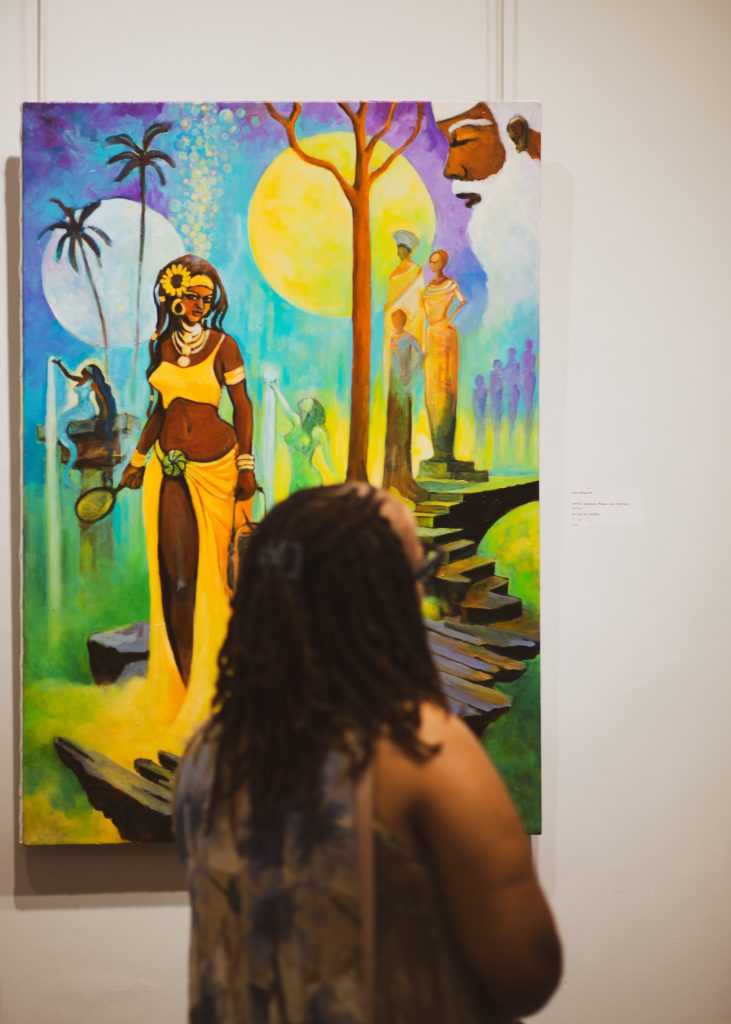
JW: That one behind you there, that's Ochun's Bliss on Yemaya's Watch. That painting there originally was the one in the foreground who's Oshun the youngest orisha. Always in trouble.
JW: Anyway, she's a goddess of love and sensuality and stuff. That was an image of a female form lying down on a sofa. And it was her mother watching her sleep. You know, maybe she wasn't well or something. And mommy said, Oh my daughter here, look at my beautiful daughter. I went and revisited the painting. And with that in mind, that emerged, right? So that is one of the stories. There are many, but I'm going to stop here because I talk nuff. Being a teacher and all that. So I'm going to share now with Dr. Jacobs, and she's going to tell her story.
Nancy Jacobs (NJ): Good afternoon to everybody.
NJ: Some of my former students are here as well. Art history really is something that I am very interested in having introduced much earlier than how they're doing it now at BCC, because they need it.
NJ: They need it. We don't seem to be able to have that whole idea about the importance of knowing, having a memory of a lot of things that sometimes… see like how he spoke about the Orishas, Yemaya, and Oshun, where did they fit? And, you know, we, especially women, carrying a child in the water, there's a lot of things, there are a lot of connections that open for us.
NJ: And a person then who can really skillfully utilize all of the figures and painting in colour? That is what is necessary. And it remains with you.
NJ: It's a memory. Something that we will take away, I'm sure, from here. And then I won't draw too close to my favourite, but John knows it.
NJ: There are some things — I don't think I've ever told you — but I was one that used to have these dreams. And I saw a lot of the Orishas swimming, coming back down.
NJ: And then I started to realize that they were transforming into humans. And I started to get frightened. Yeah, it really scared me a bit.
NJ: But as I said, I had to teach it. So I gave [the students] a formal introduction to those kinds of things. I remember that same year, you were supposed to come to do that first class.
NJ: Yes. You were supposed to. But I wonder what would have happened if you had come. But we'll leave it at that for the time being. There are lots of doors that open, sometimes early, sometimes late. So my area is really Art History with a background in — I had to paint, I had to draw — all the things, embroidery, all of that, that I love.
Kevin Farmer (KF): Thank you. Thank you, Nancy. Good afternoon, everyone. Recognize that the two fantastic people to my right are all artists. I am not. I'm an appreciator of art and a student of symbols and forms.
KF: And for me, when John first asked me, oh, we were talking tonight and talking about Orishas and everything else. And he said, Kevin, I've got an exhibition coming up. Can you write me a forward? And I'm like, I've never written a forward. But I said, yes, immediately. I've known John for a very, very long time.
KF: I was a server when John's father was a priest many, many moons ago. But when he sent me the paintings, and I began to go through them, [I was like], what am I going to write about? Outside of the ones that spoke to Orisha, there are those that speak about our landscape and houses that are no longer here.
KF: And in fact, there was one house when I came into the exhibition that I smiled at because I knew the house and it's no longer there. And as they say, art really is in the eye of the beholder and the questions that it asks you. And also sometimes the manner in which it does as well, because in a lot of his paintings outside of directly speaking to the Orishas, he is utilizing the divination board and its markings, sometimes reimagined as well.
KF: And I smiled at that. And there's some other hidden symbols around, that hark back to creation and how we move through this particular plane of existence. And I think for all of us, what we're looking at is 40 plus years of asking particular questions of the landscape that we're in. And John asks those questions sometimes in a rather deliberate way and others in a more subtle, understated and hidden way as well.
KF: And the common thread through all of the work is actually life and death, and not death to be feared, but death to be imagined as the other plane to which we go on to. And weaving its way through that is music, as well.
KF: So we have all those elements that should hopefully make us all better people, but at the end of the day, make us question the society that we're in and how we wish to leave it. And I think for me, John is reminding us that there is always time to take a step back and to question where we are and to recognize that in that questioning, we must somehow hang the hanger or the hat on a higher being and how that person allows us to traverse this coil that we're on at this point.
KF: And we have a hidden…well not too hidden. I'm going to say that John has a love of Shango because there are many axes to be found and an axe is not simply about warfare.
KF: It is about power concealed. And especially in the season where a lot of us are consuming yam, I wonder if we understand why we consume it in the ways that we do. But I think what we've also seen is almost an awakening of our willingness to openly express the appreciation and understanding of traditional African religions.
KF: And we're no longer hiding, but talking about it as we need to, and we should do so more often. So I'm hoping also in this that there are questions from the audience, because one of mine later on to John, he kind of answered why Orisha? And he mentioned Yoruba House but I'm sure there’s other things in there.
KF: Because I was going to ask at some point, if you ever thought about becoming a priest for obvious reasons, and then why that did not happen? How does that then influence inspiration and then what he puts on canvas? But we'll ask that later. Yeah.
John Walcott (JW): The floor is open, but just to be clear on some things, that’s a good question you asked.
JW: Y'all can hear me? I don't really want a mic, but anyhow.
JW: Now, just before this exhibition, I was encouraged to get a reading, right. Now, what's a reading? You can get a reading done by a Babalao, or we may call Oracle, right? There are a couple in Barbados who are trained to do that.
JW: I went to one of them, and I kind of knew which Orisha is walking with me, and they walk with you. And Orishas are… they’re energies. They're Orishas that govern the land, the ocean, the rivers, the wind, and what's not.
JW: And everyone, especially the ones who have traversed from the Western part of Africa to the Caribbean, before, before, before, before, we are born with an Orisha who owns your Ori, which is your head, correct? And sometimes you have to remember which one owns your head, or the ones that walk with you.
JW: And you can use an Oracle, and from the title of my exhibition, you know, ‘Melange Reloaded’ – yuh know that I like the Matrix, bad. That movie is something else. Right Shonelle? So again, I play around with the word ‘reloaded’, and you can probably see it in some of the paintings.
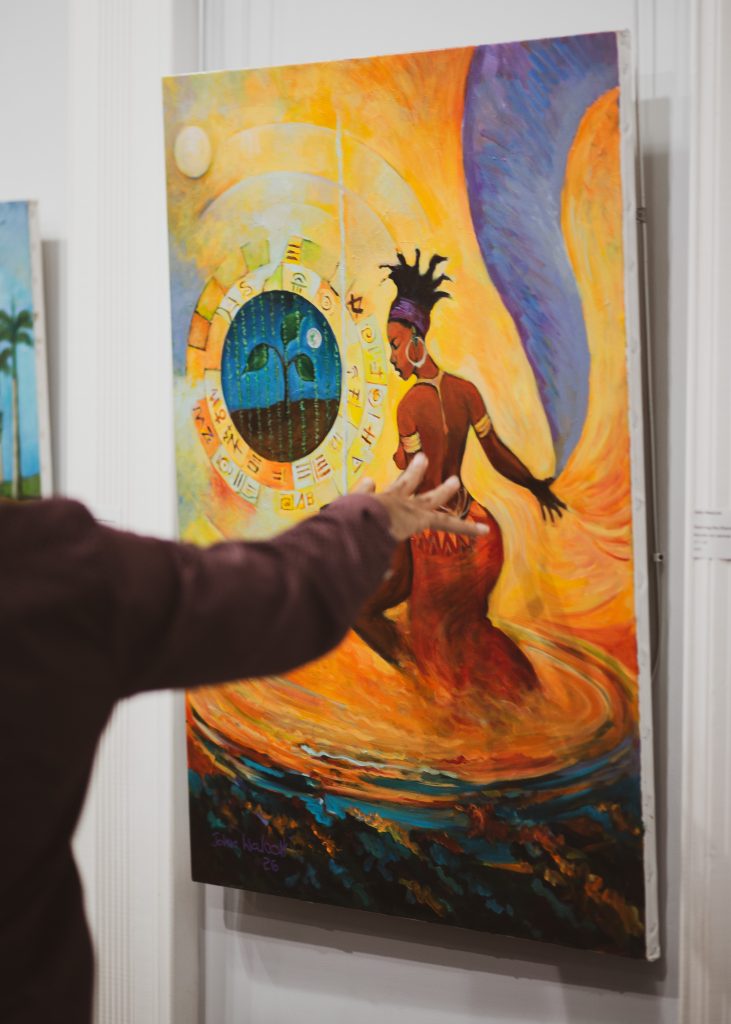
JW: This one here. Dance of the Elements, which, which I always say, the dancer looks like my friend, Petra. Right she's sitting right next to it. Right, Petra? It reminded me of her.
JW: But if you look at the surface there, that portal there, you will see some semblance of, you know, the Matrix, and you get all these numbers. Yeah, so that reminded me that, yeah, I’m a Matrix freak, right? But I got my reading done.
JW: So I am not initiated into Ifá , right? I am what you call, let me see if I get the word right. It is a Aborisha. I think that's the correct term. I'm still learning. I'm on a learning curve, right? I ain’t nobody that knows everything, right? I'm still learning. I'm on a learning curve, and I hope that I’m still on that curve, and it looks like the circle is complete. Right, Petra? Divert again, and you're learning, right?
JW: So the Aborisha are persons who would celebrate the Orishas, who will remember them and walk with them. I celebrate the Orishas through my art. My job is to listen, and sometimes you're listening, you're not sure who you're listening to, but that is how I celebrate them, right?
JW: So Kevin, possibility exists that I would go and get initiated when I'm told because we all have voices that speak to us. Sometimes you're not sure of it, but suddenly your heart is just know…you know.
JW: Over time you will know, and sometimes with consultation and with mentorship. That’s important. You must always have a mentor, anything that you do — a sport has a mentor. And they will guide you, and sometimes your heart will guide you, or your guts will guide you. You know, it's got head, and you got guts, you know?
JW: We will keep saying when younger: I had a mind, so, you know, you say that, I had a mind, so, you know, my gut feeling tell me to do such and such and such. You meet somebody for the first time, me and them spirit don’t meet, we say these things loosely, but that is something that is already in our DNA. Me and she can't set horse, we say it, right?
JW: So that is my calling, I know, right? Through this. And a person from England, Spain, Germany can appreciate the visual arts, even if it is dance, without the language. [Here] the language is this, through, somebody calling me, Who’s that? So that is where it's at, and if I am advised to take that first step, Kevin, what they call the hand of Ifá , I will do that, because, yeah.
JW: This experience was outside of the Orishas and whatnot. I also want to pay tribute to my good brother here, Nicholas Brancker, right?
JW: You will see his painting there, right? Nicholas is one of the most talented musicians out in the world, I ain't saying Barbados, right? Love that guy, man, right? And I mentioned at the opening, the first exhibition I had, solo show in 97, I paid tribute to Arturo Tappin, music again, Arturo and John King at the time, but Nicholas — who went to Uplift Show? Brilliant.
JW: And like I said at the opening, I tell him that, Nicholas, man, I got to do a portrait of you. He said Man, you say that every beep, sense, you know. The beep beep is cars passing, blowing horns, so he ain't, he ain't cussing, right?
JW: But no, I watch him at the Uplift show and I had problems with… I don't do a lot of portraits, right? Because, you know what I'm saying, you do a portrait and everybody says, my nose too big, yuh know, my ears too small, it ain't look like me.
JW: And if you do a family portrait, and they’re are five people, four right, but that one person, too dark, too red, yuh know, and you in trouble. And then you do it over and over and over and over and over and then you find you digress. So, outside of that, that is my tribute.
JW: For me, as an artist, we need to highlight and celebrate each other so we can say He is, she is, as opposed to, He was a great man. Hate to hear that. Come on, man. Right? So that is something that I wanted to do for Nicholas and for me.
JW: He's one. They are others, they're a lot more coming, right? I ain’t know how I get here, but anyhow. So, that was it for now. So, hence the word Melange, again, which is mixture or medley. I do a lot of things, but the main thing I would say to first is Orisha and preserving our heritage. We have Tyrol Cot over here. That Tyrol Cot painting there. I started that in 2014.
JW: Between 12 and 14. And at that time, Fielding Babb. Y'all know Fielding Babb, right? Yes. He transitioned in 2017. We used to go and paint a lot. And that painting there, I started that at that time and we worked on it together. And when Fielding passed away. I didn't get to finish it, but I said, well, I will do it to celebrate him. I used to call him Uncle Fielding. Fielding Babb used to give and give and give. He gave a lot to the artist.
JW: So, I really wanted to pay tribute to him. Through that painting, instead of the portrait, I finish it for the show to celebrate Fielding, right? So, I'm going to pause here because I could go on and on and on. So, we need to hear from you. There's no actual script to this.
JW: Anybody want to make any comments or questions or anything like that? Feel free to do so. We'll get some people seated. So, the floor is open.
AUDIENCE: Are you exhibiting internationally?
JW: I have done so over time. You all heard the question? Am I exhibiting internationally? I have over the years done some exhibiting in New York, Miami, Canada. I had an opportunity to exhibit in China. This is before that nonsense started, of course. 2008. That was pretty exciting. The thing is that when we were in China, that space we were in, it was 300 galleries. I've never seen it.
JW: It looked like Sherbourne on steroids. I mean, it was almost impossible to see everything in that. I mean, the work was brilliant. I learned a lot from them. I remember an artist saw the edges of some of my paintings. He says, Why do you paint your edges?
JW: I said, well, it makes it look a little more decent and all that. He said, Don't do that. I said, Why?
JW: He said, Well, people like to see the rawness of the canvas. And if a fingerprint, you know, you’re painting and the fingerprint goes on that, you know how much that fingerprint is worth. You imagine a fingerprint of Picasso, right?
JW: He said, Don't do that unless the client advises such. So, you pick up things. And then people were taking photographs. And then they go, No, no, no. He said, Let them take photographs, man. You fine one and you make money. No problem. You sue them. But there were some experiences.
JW: At one point, I had some of my famous, you know, sensuous figures there. And there was, I can't remember who the person was, whoever was in charge of it. I think one of the senior people came and they wanted to take down some of my work. And he said, No, no, there's nudity. And you can see hair in that particular place. And I was upset. And one guy said, Nah, nah, man, if they take that work down, you're going international. You're going to sell everything. You're going to be on CNN.
JW: So, I said, Really? He said, Yeah, yeah, let them take down the work. And we were from Barbados, right? Minority group. He said, Let them take it down, man. So, I go, Take down the work, man. Take it down, man. I ain’t care. But they didn't do it.
JW: They tried to say, Man, you would have gone clear, man. You know what I mean? So, that would have headlines and all. Minority group from Barbados, work taken down because of this and that thing. Am, so how do you feel? I feel very bad about this, you know. I'm from little Barbados and it really hurt my heart. I'm here to represent my country in the Caribbean. I had a script, but it didn't happen.
JW: So, yeah, I went international. Sometimes I went to New York. I had a situation where I got thief too, but that's another story for another time.
JW: Another day, though. The Orishas were with me for a long time. This actually happened, right? A friend of mine who lives in New York, I described the guy to him and he said, I know where he lives. And he… about two weeks after, he said, John, we know where he lives. You want us to go and knock on his door and tell him hello?’
JW: I said, How you mean?
JW: No, we just want to knock on his door and tell him hello.
JW: I said, Don't bother. They were going to go and greet him. You know, I ain’t want to get extradite nowhere. Tell him go long. Mona Lisa get thief nuff times, who am I? So, you learn a lot. So, I know I rambled a lot, but I just thought I would tell a couple of stories, right?
Next, yeah, question.
AUDIENCE: So, thank you. I'm really grateful for this work. I am a Barbadian by descent, and New York has a huge Yoruba population.
AUDIENCE: And as I go into my adulthood, I learned about this new community. Well, learning through community, I realized I knew a lot about it from Atari because of the late Tyrone Toppin. And he taught us our dances through the names of Orishas.
AUDIENCE: And I didn't know that. You don't know that until you have experience, right? And so, I think as an adult, I didn't see a lot of reflections from Yoruba culture that I could recognize until recently, even by the fish market, there is a huge mural of Imoja.
AUDIENCE: And there's a lot of them that we see now. I feel like painting as a reflection or a passage or portal to the origins is so historical. And your work in specific is very evocative.
AUDIENCE: It's so real and ethereal at the same time. But I just want to say that I'm really grateful because this is education as much as it's beauty. And I had a question as well. I was very curious. No, that was the gratitude. That was all the gratitude. I had a question about this. I think it's called standing on faith.
JW: Grounded by faith.
AUDIENCE: Grounded by faith.
JW: I think. I always forget them sometimes. But I think it was Grounded by faith.
AUDIENCE: Okay. I was just curious about what we're looking at and what inspires it.
John Walcott (JW): I always like to sometimes, sometimes, I always like viewers to say what they feel when they see it. Because once the artist produced the work and you put it up there and yours and more, it is yours by copyright. Yes.
JW: But sometimes when you put it up there, sometimes you want to, like for example, right? I'll give you an example. You see that painting down there called Ochun's Fire.
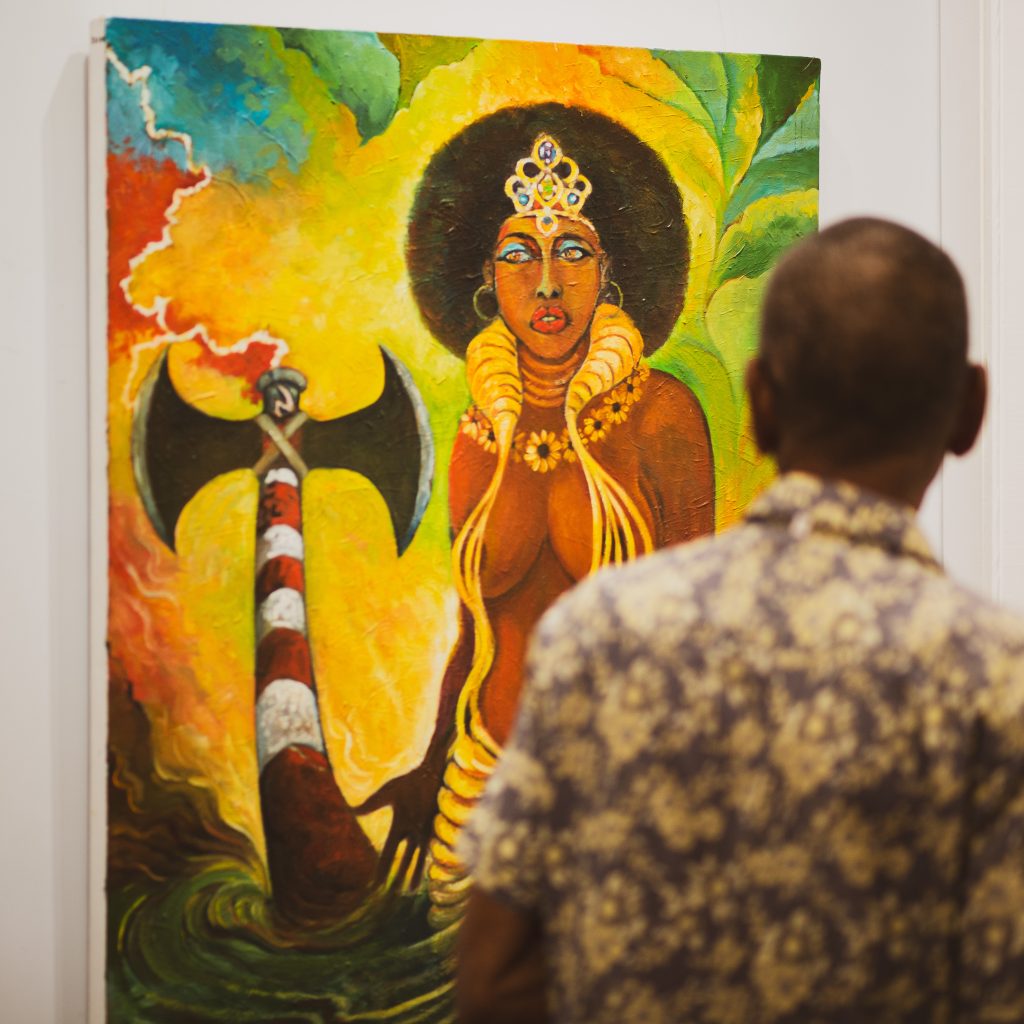
JW: The lady with the big Afro. And symbolically, there's Shango represented by the double-headed axe. A friend of mine came here the day before yesterday. Cecily Spencer-Cross. Ain't nothing bad, so you good. I saw her up to today.
JW: She say, John. What is the significance of the lighthouse? I said, Lighthouse? What lighthouse?
JW: She said, John, you got a lighthouse? With an axe on the top?
JW: I said, Well, I ain't put a lighthouse there.
JW: She said, No, that’s South Point. I'm sorry.
JW: I said, No, no, no, no.
JW: If I started to tell her about it now, she probably ain’t gon tell me about the lighthouse, right? But when I looked at it, it looked like a lighthouse, not to you? But I never thought that that was a lighthouse. And I look at it, any time I see a lighthouse, I see the lighthouse all the time because it has water too. Right?
Kevin Farmer (KF): The thing you must remember, see, Cecily is also triggered by a memory of where she went to school. There was a lighthouse and they’re waves, and she wore that to school every day.
KF: So there's a subliminal, sometimes there are subliminal messages in the back of our heads that we don't realize. And then we see things in certain ways. But again, yeah, she saw a lighthouse. She did not see the axe.
John Walcott (JW): So I want you to look at that painting, and you'll talk to me. And the rest of you want to hear.
AUDIENCE: I thought it was a really interesting piece to have, with the Orishas, because they remind us to have faith. But this felt like very much the opposite of that, which is like, if you have faith, or if you have a certain faith, it might drown you out like that.
AUDIENCE: Which is very painful and deadening, right? Um, so I thought that's like what I got from it. It's like very blatantly, it was giving me Christianity. It was giving me non-African faith. That's what that would lead to. And that's what I got from like the essence of the theme, it being with the theme. So that's my take.
JW: Okay. Now, notice the key on the right side. Look at the padlock. Is that key the type of key that will open that lock?
JW: So initially, that was a different type of key. And I decided, you know what? I'm going to throw it off a little bit, man. You know, what's it called? A master key. That's like a master lock, Eddie? So I say, you know what? Let me put a different kind of key there and let's throw it off. Because that's what art is supposed to do sometimes, throw you off balance and send you.
Nancy Jacobs (NJ): Why did you leave the padlock open?
JW: When the key is open, what happens?
NJ: The key, when a lock is open.
John Walcott (JW): You hear me? When a lock is open. What happens when a lock is open? Symbolically, what does that tell you? You have access, right? So would you say that since it is open and… do you see freedom there?
JW: So sometimes, paintings give you questions. They give you why. And the thing is that for me, if I do a painting and people walk past it. Look, it ain't saying nothing, I ain’t care how pretty it look, right?
JW: If it makes you question, but why and then, throw you off [that’s good].
JW: There are two dates on that painting. 2009 and 2020-what? 22. And again, before you ask, What you got two dates on there for? Originally, it was in 2009. We had the ashfall and it damaged a lot of my work. Although, the house shut up. It took a toll on this painting here too. Especially oil paintings, right? So I went back and I reworked them. And sometimes when you rework them, then other things started happening.
JW: You see the top left-hand corner? There is a figure there. Yes. That was not there in the original one. She appeared. And I said to myself, this looks like a female figure. What you doing in here? She said, Well, that ain't your problem, I'm here. Paint me in. I said, Okay.
JW: I don't argue. I painted her in. Same thing happened the other side. That happened after. And these other ancestral kind of beings started to appear in there as well. For me, if I do a painting, if I do a sketch, I work from the sketch. And then afterwards, I take the sketch and pelt it so, because, you know, that done. I ain’t want to make sure, okay, this got to be here. After a while, you throw it away. Because this is a whole new life now. There are some people who have painted it out.
JW: I said, no, there's a reason why she appeared there. And those other beings, I don't know what the reason is. I didn't argue. I put them in. Maybe some of these things I'll reveal afterwards. Maybe the next day, 20 years. Or maybe the next time.
Kevin Farmer (KF): And I also hope that like the fingerprint at the back of the raw canvas. That you did not literally throw the sketch away. But it's somewhere.
John Walcott (JW): I got all them sketches. Yes, I got you.
Kevin Farmer (KF): Seriously, years from now. As someone is teaching an intro to Barbadian history class. And we examine the works of John Walcott. There's going to be the painting that we know. But there are going to be iterations of the sketches that came to the final painting.
KF: That allows us to understand, thought process. The spiritual thought process as well. Especially when you have paintings 2009, 2022. So, what happened in intervening? So, yes. Please do keep your sketches. And keep them safe.
John Walcott (JW): I got some home from 1983. The paper turning yellow and thing now. But, you know. All right.
Kevin Farmer (KF): We can deal with that. And discuss that. But for everyone who's an artist. Don't throw away your sketches. You know, part of archiving how you get to that finished product. Is as important as the finished product itself. You might not see it.
KF: But over time. And others will come to appreciate that. Because again, as we begin to talk about appreciation of art. And we begin to develop art historians. And archives of art. Those sketches become important.
KF: It's like our musicians. Guys who go and write a song or score and literally ball it up and toss it. No, that's important work. That's showing working. And that's showing of working at some point in time. Is as important as the finished piece.
AUDIENCE: Like Common Entrance. Show your Workings.
Kevin Farmer (KF): Yes, there you go. But I say that to say this. The fact that we come out of a society. That likes occasionally to either hide. Or hide in plain sight.
KF: And sometimes we hide in plain sight really well. Yes, so the hiding in plain sight, because realise again, as I said. Also in John's paintings in this series. There are divination boards and their meanings which are hidden. And there's some other symbols which are also hidden in plain sight. Which is reminiscent of who we are. As we walked into Queen's Park today through the wrought iron. There are many symbols on the wrought iron. Which are hiding in plain sight. And a lot of them are adinkra and also orisha.
KF: Hiding in plain sight. So that becomes another element as well. About how we…speak to or interpret what's around us. And I find that, as I said. In this exhibition for me with what John has done. It is to come out almost openly and say, This is me. And this is it. There are all those multi-hyphenates. But then there's this. And then how do you deal with that? How do you reconcile that? And I think that's very much who we are as a people. And I'm going to lay the foundation where he said he laid it. Going to church and hearing the drum beats.
Nancy Jacobs (NJ): And Yoruba Yard.
Kevin Farmer (KF): And Yoruba Yard. And the fact that he was told, Nuh-uh that ain’t for you. How many of us are always told that ain't for you? Including going to school and actually drawing. That ain't for you. Find something else. That's a nice hobby. If it get that far. You know. It's really what is reflected here.
KF: But I want to. Someone has a question for John. But I still want John to get back to– because he keeps hinting at it but he ain’t going right into it; You're being called. You're hearing voices. They are coming as you paint. Is there then. When does the deliberateness come into play? Or the deliberateness is always there and there was not that light bulb moment. But when does deliberateness come into play?
John Walcott (JW): Deliberateness. In terms of?
Kevin Farmer (KF): Orisha. Depiction.
John Walcott (JW): Like I said. Sometimes. I would do a sketch and then five years after it has meaning. Initial meaning and then it will stop. This one here called Honey for Oshun, second from Sylvia’s Rum Shop. I spent 11 years painting that. Or more. That got layers and layers and layers.
JW: And they talk to you, sometimes they tell you, Okay, John, good. I good now. There's another one in there. Called Koi Linda. Originally it was Koi. What that got to do with Orishas?
JW: But again, it was… she had these leggings that were… the patterns were like Koi fish, right? And while working on some of the other ones. They talk to you, you know. She said to me, John, I notice you prettying up everybody. But look at me. Like I just look bare. Can you please give me some eyeliner and something a little more colorful?
JW: It was like two o'clock. They talk to you like two– between two and four o'clock in the morning. You know. So I said, Okay.
JW: The one next to her. Blondie. She told me she wanted more hips. So I said, No problem. So I fix up Koi and then I call her Koi Linda. Colander, you know like when you’re doing macaroni. That’s what it’s called right? So. There are a lot of plays on words and stuff like that. And they're all linking.
JW: I work on about ten canvases at the same time. I don't work on one. I can't work on one at the same time. Ten at the same time. Little piece here. And then it says. Me now. I go here. And then she stopped speaking to me because I'm working on her. And I said, All right, I'm done with you for two or three weeks.
JW: Sometimes. I am working and I get sleepy. The next morning, get up. What the hell is that? Sometimes you feel that some things take over. Because we are just conduits as artists. So that's a whole kettle of fish there.
Kevin Farmer (KF): Now. For those who are practitioners. Or. Or even observers. The fact that he's getting tired is an interesting comment. And I leave that right there. Ah. There you go. The fact that he's gotten tired.
KF: But no. Even. Even that. So. The time when it happens. The time when inspiration happens. The colors that are chosen. The deliberate or not deliberate symbols that are chosen. But the getting tired, to me, is interesting. You said it. It registered as. Okay. That was. That was a good song. But it has a meaning. About being tired.
There's something else happening at the time to cause that tiredness.
(JW): Um. Well. I ain't sleepin' the night before so I mean.
(KF): That might just be it too.
JW: I mean. Hey. Oh man. There's only so much you can do. Right?
KF: Precisely. Precisely.
JW: Bring in two or three Guinness. And then you painting and…
KF: Guinness and almonds, right?
John Walcott (JW): But yeah. I'll tell you this too. You see those two paintings there. The one with the cricket stumps, the one to the left there, called We Three. Right Peter?
JW: I said, Cheese on. I should’ve started that on a bigger canvas. So what I decided to do is to make the fella really, really small.
JW: So the illusion now that the stumps are big. I do a lot of cricket satire and stuff. Like, Cheese on boy. That's where we were years ago. I do a lot of West Indies cricket. I put some licks in them. They're cussing me for years.
JW: But if you look at that guy. Sitting down there. Standing, sorry. With the cricket bat in his hand. At one point it had appeared. As if he is facing us. And if you look at it again, look like he's backing. Looking up. I tell myself, Wait. He's backing me? Or he's facing me?
JW: But that sketch. I had done back in 2008. And the one next to it Spanner in the Works around that same time. I mean I take it up. Put it back down. Take it up. Put it back. It wasn't ready yet. But then it spoke to me in 2026. And I said, Alright, good. I'll do it.
JW: So sometimes. You will do a sketch. Or you will write. I mean. Gabby told us. He got exercise books with songs that he ain’t touch yet. And sometimes, when the time is right. It will be revealed to you. Not necessarily what it means. But, okay, start this now.
JW: And you start it. And then, all right, what it mean? Man, I ain't ready for you yet. And then you pause again. There's a lot of pausing. And starting. Stopping and pausing. And stuff like that.
JW: That Tyrol Cot piece, right? In 2014 when I started that…you see the left side, there? You know you got two windows on the left and two on the right? When I stopped working. There was only one on that side. I said, Wait, something wrong with this painting.
JW: When I do some research. Oh shoot. There is another window on that side. I had to go and paint that in. And then I did that every since. When I look back at it, I went back and corrected it. Maybe Fielding said, John, John. Fix that before you carry that in the show. Maybe he did. Because he’s in the ancestral realm now.
JW: He was my mentor. So sometimes your mentors talk to you still. They talk to you. My father was here on the night of the opening show. He came. And he came like thunder and hold on to me and I couldn’t talk.
JW: Those who were here. Daddy opened the show in 97. And I went through the script and thing and read it back and dah, dah, dah. It was all right. Came here on the opening. I started reading the thing, and from the time I said, My father opened– [chokes up]
JW: But. I got…emotionally. Unstable. The only thing that saved me. My mother was there as well. And I said, But mummy's here. And I felt him. Left. And went and held me. So they’re with you.
JW: I was going for an interview. When I was going to teach at Graydon Sealy. And I tell myself, What I gon say?
JW: So I said, Daddy. I imagine he’s sitting to my left in the car. Daddy, what to do in this interview?
JW: Just be yourself, I heard that. Just be yourself. That's all I need to hear.
JW: So sometimes. You hear things. When you work. When you write. When you dance. When you. Perform. Even at work. It don't have to be creative. They talk to you. You can either chase them and say man, leave me man, or listen.
JW: One day I was tired after a rehearsal. I bought some milk. I like milk and Rough Tops. Don't ask me why it is. I like milk and Rough Tops. Now I get a little coffee creamer, not maple almond– Hazelnut.
JW: I come home now, next day I can't find my keys to leave the house. I look all about. Can't find the keys at all. When I look on top the counter, I see the milk there. I said, I forget to put— Daddy where are these keys man?
JW: John they're in the fridge.
JW: Made sense. Because the milk that was poured out, on top the counter. Open the fridge, keys there. John they in the fridge!
JW: Thanks daddy, I say so. So sometimes you gotta listen. They talk to you.
AUDIENCE: What is interesting, is the Orisha practice and you as a conduit. People mention that there are hidden meanings but that is to me natural as to survive, they had to practice within Catholicism and pair their saints with the Orishas. I suppose my question is, with regard to your cricket pieces. Is your palette a deliberate choice? Or a subliminal choice? Or is it a combination of both?
John Walcott (JW): The palette. I gine tell you something right. You know. I know some artists would go and plan. This is my color sketch. I can put blue here. And this and that. I don't do that. I squeeze out the paint. Start to work.
JW: Right. And sometimes. I may just work on form. Or stuff. Or mood. I say all right. This day or night? If it is day, I gine say, you know what, let me put this at night.
JW: That painting there called ‘I Soah Tired’, that belonged to a very close friend of mine. I won't say who she is. She here though but, I ain't say who it was.
JW: I started that painting. When we had painting on the spot here [Queen’s Park, Barbados], about three years ago. And we were out there, right Jackie?
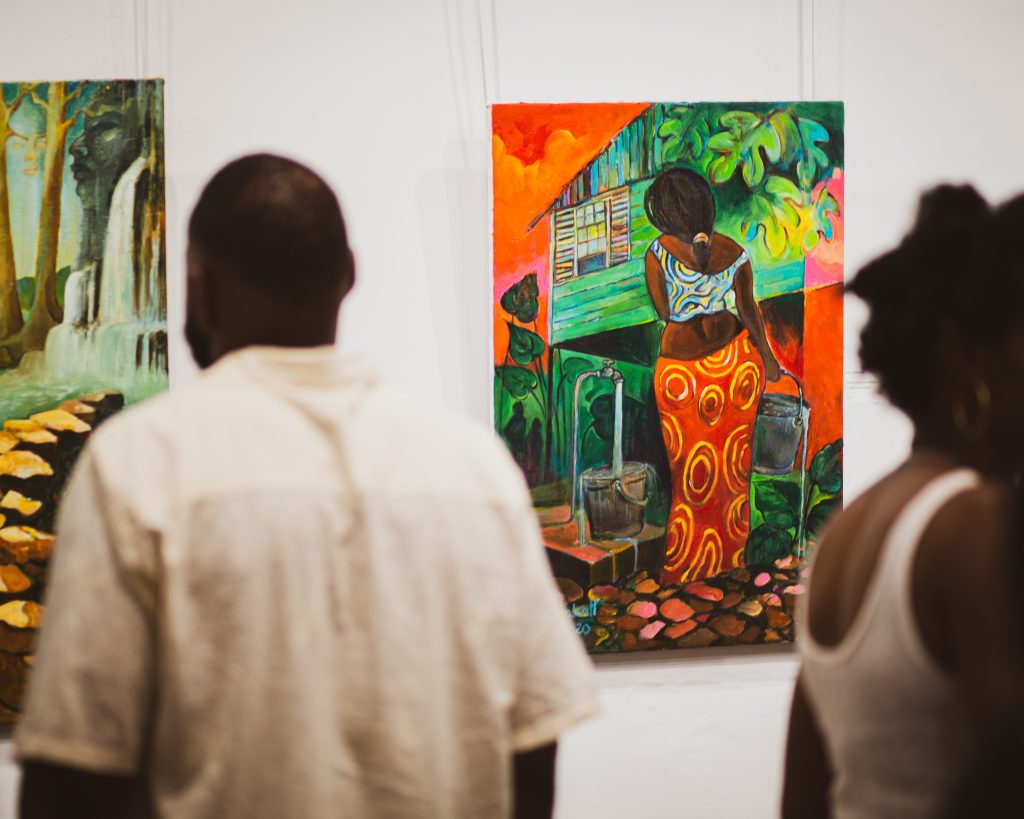
JW: Painting out there. And it was a daytime piece. But I say, You know what, this lady, must’ve been out there washing the whole day. It can't be day no more. So I change and put it evening time because she's washing the whole day. And she’s like, Cheese on.
JW: I had a little girl. Hovering over her. Right? I said, No. That little girl probably inside doing something. Mummy out there still washing. And she– you know–and it was called ‘I Soah Tired’. S-O-A-H. You know. And I said, It got to be late evening. Sun gone down and she's still washing clothes. So. I paint stories. I paint stories.
JW: And I mean. A lot of people could identify. The juckin board. And that kind of thing. Poor lady. The little girl was represented by the size of the clothing. The little socks and little thing that suggests that she got young children.
JW: So the palette comes and it goes. I just squeeze out the paints and when I run out I just use something else. Right.? You know. So that is-that is how I work. Intuitively. Sometimes I will plan but I ain’t want–.
JW: My friend here. Shaunelle. This girl here. We were at Community College together. When Shaunelle doing, she got like 25 cue cards. This for there. She is very organized.
JW: Right? Eddie will tell you. This is my thesis box. And this and that. And she's very organized. You know Mary? I said look, Shaunelle, How you is do that?
JW: You have to plan. You have to plan. You have to plan.
JW: Me? My things all bout the place. All bout. But somehow I managed to get it done. But this young lady here?
JW: That's my personality. I cook the same way too. When I done cook in the kitchen, my sister will tell you, I got flour all over the place. You're supposed to cook and wash as you go. I can't get that do. I'm cooking and then painting.
JW: That's my personality. I'm cooking and painting. Often times I drink paint too. Because you know…you got your coffee there. One time, I drink this coffee, I said, What's that green thing in there?
JW: Yeah. And that's why I'm like this, because I got too much paint in my veins.
JW: So Rodney that’s…I’m like that, that's me. I paint. Squeeze out the paint. Right. Sometimes. I just want orange. What makes orange, yellow and what? Of course. I ain't got time with that. Need orange. I need Orange. I want it now.
JW: I got about 16 different shades of blue. I want this blue. I can mix yellow.
JW: As a teacher, I will say, But students you need to mix your colors.
JW: But sir, you mix them at your–
Jw: No, Not all the time, but you, when you get to certain things you can do that. But mix your colors.
JW: But no. That's just how I-I'm spontaneous like that. And I don't like watercolors. Because when you put on a watercolor. That is it. I want to take out the man. Put it in. I want to take out things. Put them out.
JW: That painting with Tyrol Cot, that car wasn't there. I said look, man. I gon go and look through– I always loved the old British cars. And the Daimler. That's a Daimler there.
JW: And I said, Well, you need to put it there. I said, It’s there, just dead. Paint in a man next to it. What he looking at?
JW: I said, Well, he got to be looking at somebody? So I painted the lady, coming down the stairs. She can't come out by herself, so a guy there saying oh- ah. You get me? That wasn’t planned.
AUDIENCE: Speaking on his piece Hanging in the Balance the audience member inquires on the choice to include an apple.
AUDIENCE: That's the only question. I have.
John Walcott (JW): The apple. I don't know why I put an apple there. But, an apple and a cricket ball look close, right? And I say, You know what? I had two cricket balls. I said Well, that boring. Let me put an apple and throw off the conversation. You know, same kind of shape, you know the apple. Cool, it red. You know. And. And then that safety pin went in after.
AUDIENCE: So nothing to do with…Eve and the creator?
JW: It could. It could. But, years ago, we used to do the cockfighting thing. Right, the mahogany thing. Not that–Disclaimer.
JW: Right. Cockfighting. When I was at Wesley Hall, the thing drop out the tree and get the helicopter, right? But you had this mahogany–
Nancy Jacobs (NJ): Pods
John Walcott (JW): And then. Right. That was good fun. Right.
Kevin Farmer (KF): It was.
John Walcott (JW): Then you come now to that safety pin, right? You know, it’s the little things in life that matter. If you take off that safety pin, the whole thing gon do so [fall apart]. You know. You got something called the last straw.
JW: You know, you're going through and then somebody– you've been through eight or nine things. And somebody cut cross you? Get pon your last. And you cuss them out? Tell them about their mother and thing. You didn't intend to do it. But that was the last, the little thing that mattered.
JW: So that thing. I put that in there and opened it a little bit, and it kept everything in line. But the apple? Maybe I was eating the apple then, I don’t know? And then these uhm…that got some damage by the ash fall too. And I went and reworked it and then I put in the gray nickels to suggest that it could be brightened up a little bit.
JW: And then, again, these ancestral beings started, you know. They were there before but they came up brighter. But that's when I knew that, you know, they're around, they're all over. When you see them, that painting there with that, with that, that dancer there called The Moon Catcher, got a sweet story to that there too.
JW: I did that sketch ten years ago, right? A bit more though. I was married to a dancer years ago and she was just there doing a dance. I said, What is she reaching for? Then I watched a movie with my daughter called Despicable Me. Y'all ever seen that movie?
JW: Where the man shrunk the moon and he made the moon really small? I said, You, I wonder if she could reach for the moon? So I called it Moon Catcher.
JW: About two years ago, two of my past students came to see me. I taught both of them. I taught one at Garrison School back in like 87, did my teaching practice there. And the other young lady at Deighton-Griffith School? She didn't know that I taught him at school. They came to the studio.
JW: He said, Walcott, what going on?
JW: You know, he?
JW: If I know he? He teach me at school long before you.
JW: Anyway, they had a little daughter. Her name was Kiyomi. And she went around me and she keeps stopping at that painting. Mommy, I love this painting.
JW: She did gymnastics, right? And it was around like the first week in December. And they were saying they were looking for a gift for her for Christmas, right?
JW: She said, John, John, John, I know. Can you do a print of that for me? I said, Good, no problem, no problem. And she asked me about it all the time. And I told her the story about the moon. And did you watch Despicable Me? Oh, yeah, I saw that.
JW: Christmas morning. So I did it, you know, did a print of it. And she said, Mommy, what is that? That's for you. They videotaped the whole thing. When the girl opened that thing. She leapt. She cried. She said thank you. And they send me the video. I cried about five minutes. I couldn’t let anybody know. So I renamed it Kiyomi the Mooncatcher. Oh, my goodness.
JW: And when I told her, everything break loose now. Right? So I had it done for Carifesta and stuff. So sometimes even the titles of the paintings, they change. But the joy that that little girl had when she saw that, that was a sale for me. Money can't buy that.
JW: You know, if somebody ordered a painting or something. And then,
JW: How it is?
JW: Alright.
JW: Uh-uh, you don't like it.
[Laughter]
JW: No, It ain’t that I don't like it.
JW: What's wrong with it? But when they go, Oh, my gosh, John. I said, Good. No problem.
JW: That's the sale. That was the sale. There was a lady that was a good friend of my father's’, Mary, a tall lady. Oh, gosh. She lived in St. Joseph. She was at Daddy's church. I can't remember.
JW: But she sent me a photograph of the house that she lived in. She was in her 70s at the time. She was a little girl in St. Andrew. And she described it, it was a black and white photograph, right? And she described every little iota and I writing. You know, we had a dresser out here, and the roof was this, and I'm writing, writing, writing.
JW: Can you do that for me, John? That's the house I lived in.
JW: I say, No problem. And I went home, looked at the photograph, and then all the things she describing, I could see it in my head. Because artists, we tend to think of visual things. That's why I do voice notes.
JW: They does curse me all the time. I don't like writing. I can't deal with that.
JW: Anyway, so I went home, and I did the painting. Yeah, yeah. And when I took it to her, right? I told her to have a seat. So I put a little cloth over it and let her sit down. And I unveiled it. Right? I was scared. She was like, about 10 minutes of silence. 10 minutes, right?
JW: And I– John, you messed that up? And then the water started coming out. I say, Chee. I had feel bad.
JW: John, How you get that do? And then she got up, and she gave me a hug. Right? And she cried. That is the house that we used to live in!
JW: I said, But you described it to me, and she, yeah, boy. I had to stick around for a little bit. I had to make sure she was good before I left, right? I didn't want to hear now that– you know?
JW: But that's one of the joys of being an artist. May it be a visual artist, or a dancer, or a singer, that you perform something, and then you reach the audience. And they come to you after and says, Cheese on.
JW: Or they say, Man you, that thing was so boring! You want to hear that, too, you know. You want to hear it. Just get that sometimes, right? But that is, oh, that's do something to you man.
AUDIENCE: Miss Goddard
JW: Right. Miss Goddard. Miss Goddard. Sweet Lady.
AUDIENCE: The question here revolves around the piece, Who Will Raise West Indies Cricket, asking the artist to delve a little deeper into the symbolism and meanings hidden within the art.
John Walcott (JW): I can tell you some of what I can tell you. And there are some things that I will not be able to tell you. But what I will say is West Indies Cricket was, I mean, for years. You know, from 1999 up before that. Up and down. Fellas ain't like the glory days. So the question is, who will raise West Indies Cricket? That's the question, right?
NJ: W-H-O. Who?
John Walcott (JW): So then, You know something. Let me call the man Who. So is it that who will raise West Indies Cricket? Identify the person as who? Because you know when you have your cricket thing, your name is on the back.
JW: And you have a number, right? I will say it. I had an arbitrary number there. But I say, You know what? Number thirty-three is a very interesting number. How many bones do you have in our spine? Thirty-three. But I would say that in freemasonry, right? Thirty-three is a very senior number.
JW: I mean, I could have used other things, too. I could have put the pope. I could have put Einstein. Right? But I just chose that number. And there are other things in there that other people will see. But there is enough there. There is enough there to make you wonder, ponder, ask. And aesthetically, it still works. Right? People say cricket dead.
Nancy Jacobs (NJ): Another lady there to ask a question.
AUDIENCE: In several of your paintings and art pieces, you mention Orisha. When I was growing up, I never heard of the Orisha. So I wonder if there is a connection between Orisha and what we know as Obea.
John Walcott (JW): Orisha and?
Nancy Jacobs (NJ): Obeah. Obeah. Juju. Yeah. That's what they'll be telling you.
JW: I will let my learned colleague answer that question.
Kevin Farmer (KF): Your learned colleague?
John Walcott (JW): Not, my colleague. No, sorry. My senior tutor. My mentor.
Nancy Jacobs (NJ): Oh, God. Lord. Sometimes… we will break that down.The first one you asked was? Orisha.The word Ori means head. So the way of the gods or who controls the head. That's it. That's how I explain what that is.
NJ: And the second word you asked now was Obeah? Obeah is also seen as an African religious practice. But anything that was done by an African was negative, is negative. Therefore for their own selves. So what we always say is that’s a lot of Obeah. So it wasn't anything that you should [pay attention to].
NJ: Like a lady asked me, What does slim pickings mean? Because she didn't know. I said, Slim pickings? I said, Well, it means the same thing like we say that’s a lot of Obeah. That's slim pickings. It's not much that you can really decipher out of it. But they made us feel as if there was nothing there for us really to, yes, the word cherish.
NJ: You weren't supposed to really love yourself and the things that were there for you to love. But there are lots of things that I find that today we now, acknowledge and can get up and say, you know, yes, this is something that was happening. I had a question for you too, but I didn't have to ask it.
NJ: It was about music or the songs that you hear when the Orisha are around. Because the music that belong to Yemoja is different to the one that belong to Oshun. When you start to hear that music start, you will know.
NJ: But even now, because I am spiritual Baptist, the kind of music that I would hear is still a lot different. And I'll tell you, Sunday I heard a particular song. Whenever I get to hear these rhythms, they're going to come out because I gine sing them.
NJ: And a morning, was it yesterday? Yesterday morning when I got up and I singing: Last call all aboard. And I stopped myself. Last call? Who this last call for? And tell you, all aboard. So we leaving. I said, Oh, gosh. But I didn't think about that too much. Later in the evening, I got a call.
NJ: Somebody gone.
John Walcott (JW): So you got the message through the song.
Nancy Jacobs (NJ): Through the song. So different people will pick up different things from what they're hearing, what they're seeing. And still wanting to find out that particular favorite, my favorite piece. Is it time close enough yet? Yes, it's five to six. You have five more minutes.
Kevin Farmer (KF): I think you should tell us.
Nancy Jacobs (NJ): John, you could go and show them the piece.
John Walcott (JW): Your piece? Your piece? If you look to your left. Right in the corner. You will see Nancy’s piece. Mami Wata and Koi. In the corner there. Right in the corner.
Nancy Jacobs (NJ): It's not something that you're going to look at straight away, right?
Kevin Farmer (KF): I saw it straight away.
Nancy Jacobs (NJ): You saw it straight away, but what? But you didn't associate it with me.
Kevin Farmer (KF): No, I didn't associate it with you. What I associated with was how John sought to fuse African symbology with Japanese symbology. Because Koi has a particular meaning in Japanese religion. So I just found it interesting.
Nancy Jacobs (NJ): But you know origins of the Japanese?
Kevin Farmer (KF): Yes. Again, the smile. I smiled when I saw it. Because again, everything in here has a hidden history. Everything John has painted has a hidden history. Whether it is the history of the Orisha and Japan, or it's the history of ourselves on our buildings. Even cricket has many hidden mysteries within it.
KF: That infuses everything that's here. Because we are also fusions of, again, I would point people to his divination on the painting– What's it called? The one with the matrix.
John Walcott (JW): It's called Dancing the Elements.
KF: Dancing the Elements utilizes Adinkra, indigenous Caribbean, and other symbols within it. So those are ever-hidden things within the paintings.
John Walcott (JW): When I painted that, right? It was a Koi fish swimming there. I am convinced that. You see that ash fall? That was a messenger boy. Oh man. But it opened up doors. Listen. That Mami Wata went in there afterwards. It wasn't there all the time. Maybe she was there all along. But I started to rework them.
JW: This one too that moon ain't that big, first time. Right? That moon was smaller. But then you see a lot of moons in my work. A lot of moons and suns. A lot of stars.
JW: You know what? I feeling that something in that water other than the fish, you know. What is it? I said, Aahh. That time, before then. Turn on my TV, YouTube. Mami Wata story comes on.
JW: Oh. Happens all the time. My cable TV went kabunker. The only thing I could watch was YouTube. This was a gift to me. They say, Why you don’t go and get the thing fixed?
JW: I watch movies and things. But something related to what I'm doing has come up all the time. Mami Wata came up.And I painted her in. And I said, But you know what? I'm going to paint her, not forward, down inside there.
JW: And then the symbol of the snake. That went in after too. So yeah. It happened in a lot of these works in here. But that Mami Wata wasn't there.
JW: And I heard a story about a fishermen. We don’t have much time, but the fishermen he ain't catching no fish.
JW: And he’s there cheese on: See me. I going and dipping into that river.
JW: And the men said, Don't go down there, boy. Mami Wata going to get you.
JW: He say, Look, I got children to feed.
JW: He gone down in there. Start to catch one or two fish. And she came up there. Hi, how you doing? Beautiful. Because she's always very beautiful.
JW: He say, You, that woman pretty. And she said, Well, you know. I notice that you're not catching no fish. I can help you. But it's going to cost you.
JW: [He says] No problem. Just tell me.
JW: [She says] I can give you a lot of fish. But your heart belongs to me.
JW: [He says] No problem. I got children to feed. Gone back there next day. Fish. Fish. Fish. Fish. Fish. Nuff Fish. Making bare money, man. Rebuild the house and thing, got the children there. Everybody happy.
JW: Men say, How you get that do?
JW: [He says] The secret, man. I'm a good fisherman. But he was supposed to go and pay homage to her at least once a month or once a week. And he decided, You see me? I good now man. I Good.
JW: But Mami Wata is come to you in a dream, right? Hey, what's up, Peter? You forget me?
JW: [He says] Man, I happy. that you helped me a lot, but I had enough.
JW: [She says] No no no no no we had a pact. You ain't shout me recently, I ain't seeing you.
JW: [He says] But, me I good now but thank you for your service,
JW: [She says] No problem.
JW: So everything was taken away from him. He ain't got no more fish.
JW: [She says] But you know what I forgot to tell you, that little boy you got, that son you have, he belong to me too. Bring him by the river.
JW: He goes to one the elders, the senior, and said, Listen Mami Wata….
JW: [The elder says] You did what? Nah you don't do that, so she went and she pleaded and pleaded and pleaded with Mami Wata. Don’t take away the man little boy. Look at he, he’s a little fisherman, he young, he’s inexperienced. Beg and beg and beg and beg, and then eventually she stopped
JW: [Mami Wata says] All right, good, I'm gonna release him.
JW: That's one story right, but from hearing those stories, those stories is send me to the canvas. And then you hear about seven or eight different versions of them and I paint, I paint, I paint, I paint, I paint, right. So that has been my experience some of them we don't know if they're true or not, but it's a story, I see y'all so right, so that means it exciting right? Or it boring? I don't know? But um yeah, I done so, any more questions?
JW: Wunna hungry?
[Laughter]
JW: I could talk the whole night.
Oneka Small (OS): Are there any other questions? So all that’s left for me to do at this point is to thank John, Dr. Jacobs and Kevin. And all of the audience that are here tonight because it was very participatory. Thank you very much John, we enjoyed hearing you bring a lot of the paintings to life and telling those tales. And we look forward to you reconstituting your art and theatre ventures where you actually bring these two together.
JW: You like you in my head. That gon come soon.
OS: I wasn’t in your head, it’s what you told me you were going to do.
JW: Oh I tell you.
[Laughter]
OS: Speaking it into being. Because, one of the things we really enjoy is the stories, that we can play in our own imaginations. So thank you very much. Thank you for the engaging discussion and feel free to stick around and look at the artwork a little while longer.
END
Documentation by Giselle Walker. Photography courtesy of Giselle Walker